
Property Management
What are accessory dwelling units (ADU) and are they worth the price?
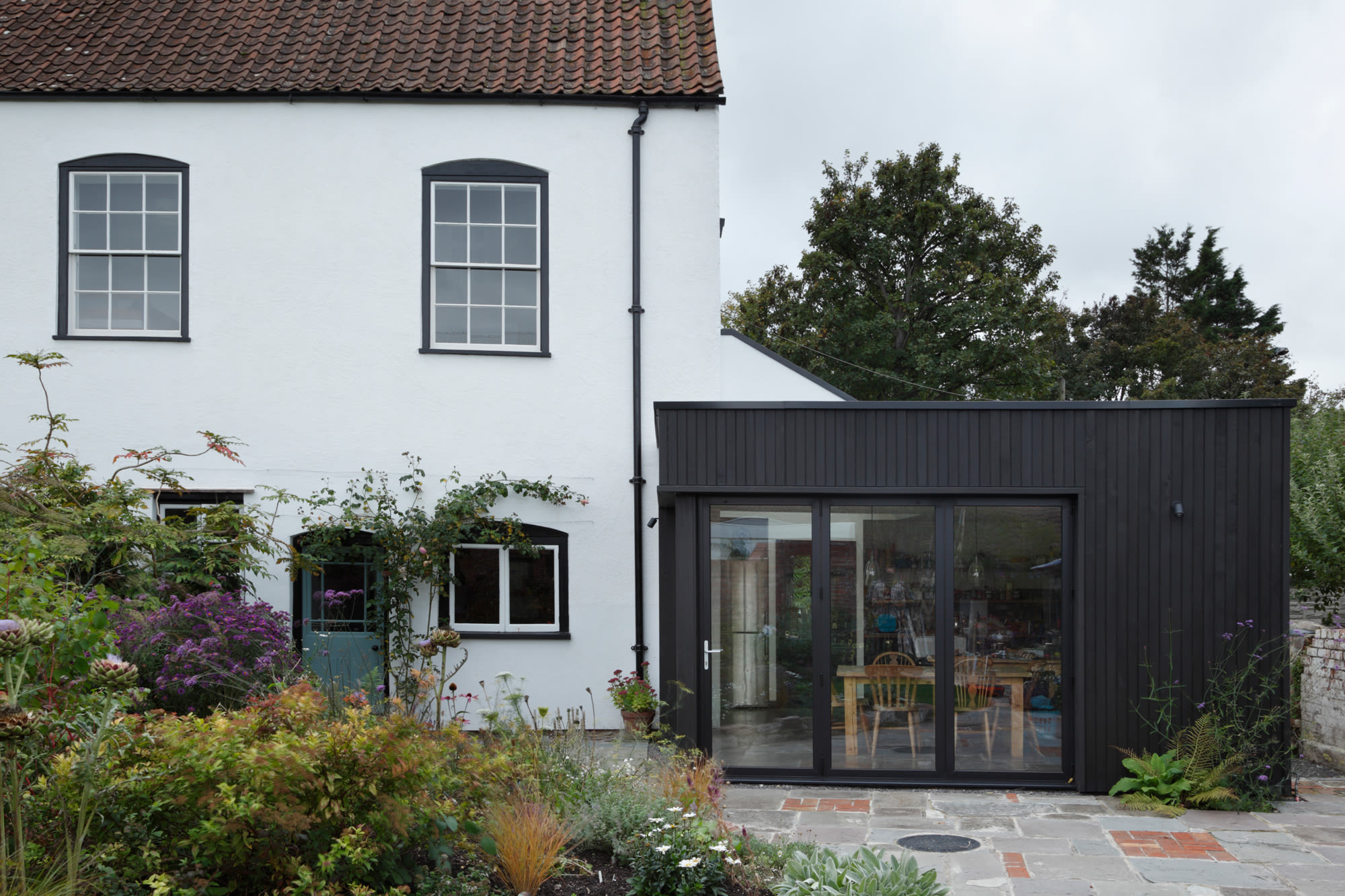

Table of content
An accessory dwelling unit (ADU) is a smaller, independent residence on the same lot as a stand-alone single-family home. They're often also known as granny flats, casitas, or in-law suites.
An ADU is a potential way to increase a property's value and the income it generates, or provide housing for family members or guests.
They're particularly popular in areas where real estate is more expensive (think Austin), because they're an opportunity to invest in real estate where doing so may otherwise be cost-prohibitive.
ADUs also have the advantage of having many financing options, making them accessible to many types of investors.
What are the benefits of an ADU?
Passive income stream and increased property value
An ADU can generate passive income as a short-term or long-term rental.
Alternatively, a property owner could choose to live in an ADU and rent out the primary residence.
Home for aging relatives or adult children
Not everyone feels comfortable with their older relatives in a nursing home or retirement community. With an ADU, people can have aging family members nearby, or provide a residence for a caretaker if the older family member lives in the primary residence.
An ADU can be built to fit the needs of an older occupants, with features like ramps, lower countertops and cabinets, and wider corridors for wheelchair access.
Adult children who choose to stay close to home might also be great candidates to live in an ADU.
Home office space
In the work-from-home era, people are converting every imaginable space, from closets to garages and basements, into offices.
Among the most popular locations for home workspace, reports USA Today, is the ADU, which affords the worker a separation from the rest of the home, and doesn't sacrifice living space.
What's the difference between a tiny house and an ADU?
ADUs are permanent and sit adjacent to, near, or in conjunction with a main dwelling structure. Tiny homes usually have wheels or exist on small plots of land that have no other buildings.
ADUs can be anywhere where there's already a pre-existing structure, but a tiny house needs a special permit or a small parcel of land just for itself. As a result, it's easier to construct and approve an ADU than most tiny houses.
The laws vary and are evolving on how big a tiny house can be, but they're generally much smaller than ADUs. Meanwhile, the size of ADUs is only constrained by the size of the land they're on, and whatever local zoning rules may apply.
What are the different types of Accessory Dwelling Units?
Detached structure
This is an ADU that's in the back or side yard of a primary residence. They're usually made for the sole purpose of creating more living space. They can also serve a second function, like a second-floor unit above a detached garage.
Since these ADUs are detached, residents can do as they please with little effect on the main property. This is especially appealing for tenants who want a sense of independence. Occupants can come and go as they please and have privacy from the main house.
A detached ADU brings extra building and maintenance costs. This includes utility hookups and mechanical appliances (furnace, water heater, etc.). A detached ADU also takes more raw materials to put together.
Attached external apartments
These units share at least one wall with the primary residence. They still have separate entrances and don't share any internal connections with the main unit. They tend to have their own utility hookups, although connecting them is less expensive since the distance traversed is less. They may share mechanical appliances like a furnace or water heater, but not necessarily.

Financing an Accessory Dwelling Unit
Fannie Mae HomeStyle Renovation mortgage
These loans are for significant renovations.
Down payment as low as 5 percent.
Private mortgage insurance until 80 percent loan-to-value (LTV), which is the amount of the loan divided by the appraised value of the property expressed as a percentage.
Credit score greater than 650.
FHA 203(k) renovation loan:
This loan lets homebuyers combine the cost of major home improvement with purchase loans.
Ideal for first-time homebuyers who don't have excellent credit.
Mortgage insurance of 1.75 percent of the loan's value.
Construction-to-permanent loan (all-in-one loan):
Financing for every part of the home building process from purchasing land to completion then converts into a 30-year loan.
Only one closing necessary.
Short-term construction loan:
One-year terms
Variable interest rates that are higher than long-term loans.
Once construction is done, the loan converts into a permanent mortgage.
Second closing is required.
Cash-out refinancing:
The borrower refinances for more than their home is worth so that they get a large lump sum of cash.
Ideal for those with significant equity.
The borrower may get better rates if rates have fallen since the initial mortgage.
The lump sum of cash is not taxed as income.
Home equity line of credit (HELOC):
This is a credit line secured by equity.
It has a low interest rate because it's guaranteed.
Unsecured personal loan:
Short-term loans are ideal for people who plan to sell their homes after building the ADU.
You might also like

















































Property management
Institutional


Disclosure: This material is for informational and educational purposes only. It is not real estate, investment, or financial planning advice. Roofstock is not your advisor or agent unless expressly specified by Roofstock Realty, LLC. Please consult your own experts for advice in these areas. The information is derived from proprietary and nonproprietary sources Roofstock believes reliable, is subject to change, and is not guaranteed to be current, accurate, or complete. Roofstock strives to provide a wide array of services to investors, including services from partners that provide financial services, real estate brokerage, and property management services. These partners do not represent all available options, and Roofstock does not guarantee their services. Some of these partners may compensate Roofstock for customer referrals.