
Real Estate Investing
Real estate investing in Austin, Texas, a city that went from "hippie haven" to tech hive


Table of content
Austin’s reputation for bohemian living was cemented among the indie-film set by Richard Linklater’s “Slacker,” a cult classic set in the city and shot for $23,000 in 1989. One memorable exchange runs: Character A: “Sorry I’m late.” Character B: “That’s okay. Time doesn’t exist.”
“Low rent, fine weather and a tolerance for eccentricity have for decades shaped the Texas capital’s laid-back culture into a paradise for dropouts,” The New York Times observed in its review of the film.
If Austin real estate isn’t quite so cheap anymore, the city maintains its appeal, for university students, techies, startup founders, musicians and others.
The Texas city draws rave reviews. U.S. News and World Report ranked it the best place to live in Texas in 2022 (even though, due to affordability concerns, it dropped out of the top 10 in the country to number 13, still not too shabby). The paper also ranked Austin as the 10th-fastest growing city in the US in 2022, after it grew by a remarkable 33 percent between 2010 and 2020, attracting many a real estate investor.
The metro area’s population now stands at about 2.3 million, making it the country’s 28th-largest.
A letup in the frenzied Austin real estate market
The continuous population influx led to a wildly competitive atmosphere, especially during the pandemic, both for homeowners and those seeking investment properties.
When Curbed magazine reported in summer 2021 on the city’s “wild” real estate market, it led with an anecdote about an East Austin house without central air-conditioning that got snapped up in four days for $2.6 million, $850,000 above the listing price.
“Totally insane,” said one agent.
But even the poster child for hot, hot markets has returned to something resembling normal, according to a November 2022 report from the Austin Board of Realtors (ABoR). For the first time since February 2019, home prices were static year-over-year.
“It’s a relief to see more homes available and sitting on the market long enough to give buyers an opportunity to think before they leap,” Cord Shiflet, 2022 ABoR president, said. “This healthy competition creates an opportunity for homebuyers, who may have struggled within the past two years, to take their time and find a home they love."
In November, home sales dropped by some 36.6 percent, the largest drop in closings in this real estate market by percentage since May 2020, in the early days of the pandemic. New listings declined 17.8 percent.
"Homebuilding has been declining and this will will continue over the coming year," says Ed Friedman, a director at Moody's Analytics. "New permits for single-family units have fallen by about 30 percent since the end of 2021. The reason is declining affordability because of rising mortgage rates, which are likely to rise further. The exceptional rise in house prices in 2021 also contributes to the decline in affordability."
Indeed, Austin real estate is hardly a bargain, according to ABoR’s numbers:
The metro area median home sale price in November was $467,955, unchanged year-over-year.
Average days on market was 58, up 36 days from last year.
As of December 2022, single family homes were renting for a median $2,115, up 10.6 percent year-over-year, according to John Burns Real Estate Consulting.

From a slacker haven to HQ for techies
The slackers in “Slacker” have put down their bongs and picked up laptops, gaining the city, nestled in the beautiful Hill Country, the nickname Silicon Hills.
The love story between the region and tech dates back to 1984, when a University of Texas freshman named Michael Dell launched a computer company that would grow to titanic proportions.
The Texas capital has been one of the beneficiaries of a widely reported exodus from Silicon Valley, outstripping cities like Dallas–Fort Worth, Las Vegas, Tampa, and Charlotte. WalletHub recently ranked Texas’s capital number 2 in the nation for STEM jobs.
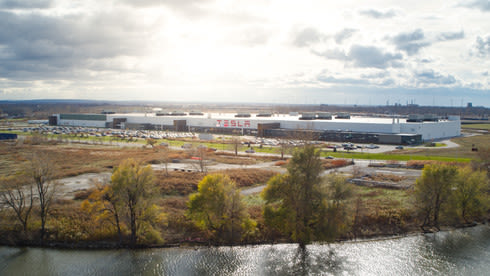
According to a TechCrunch article from May, Austin is emerging “as a city of unicorns and tech giants, with VCs investing $5.5 billion in 2021, more than double in 2020. It pointed to Tesla's $1.1 billion "gigafactory," Oracle's moving its HQ to Austin, and Apple's $1 billion campus.
These companies join other major employers like IBM, Samsung, and AT&T that have already found a home in Austin.
But Friedman is concerned that the concentration of tech jobs may leave Austin vulnerable to shifting winds in the economy.
"Specifically, high-tech software and services businesses, typically the bulwark of the local economy, are signaling that 2023 will be a challenging year," he says. "Companies have reacted with caution to weakening revenues and the possibility of recession.
"At the national level," he says, "Twitter has laid off thousands following Elon Musk’s takeover, and Meta (formerly Facebook) plans to lay off 11,000 after stating that employment would be flat in 2023. Google and Apple have said they will be cautious about hiring. All have a significant presence in Austin."
Housing fever, meet cedar fever
If some are making out like bandits on selling Austin real estate, there’s always a downside. Soaring home prices, predictably, have put the brakes on what seemed an inexorable drive to increased diversity. “
You might also like



















Property management
Institutional


Disclosure: This material is for informational and educational purposes only. It is not real estate, investment, or financial planning advice. Roofstock is not your advisor or agent unless expressly specified by Roofstock Realty, LLC. Please consult your own experts for advice in these areas. The information is derived from proprietary and nonproprietary sources Roofstock believes reliable, is subject to change, and is not guaranteed to be current, accurate, or complete. Roofstock strives to provide a wide array of services to investors, including services from partners that provide financial services, real estate brokerage, and property management services. These partners do not represent all available options, and Roofstock does not guarantee their services. Some of these partners may compensate Roofstock for customer referrals.